About the Author: Frank Tinari
By way of introduction, I am Professor Emeritus, Seton Hall University, with dozens of articles published in peer-reviewed journals as well as in the popular press. My most recent book, Forensic Economics, to which I contributed five chapters and edited the others, was published by Macmillan in 2016. Though I am an economist by profession, one could say my avocation has always been a deep interest and love for art and music. When I was a toddler, my innate love for music was reinforced by mom who loved to hum and sing along with tunes of the 1940s heard on the radio. I started collecting 45 rpm records and LPs in my high school days during which time I headed my school’s “Poster Club” with designs that promoted various school events.
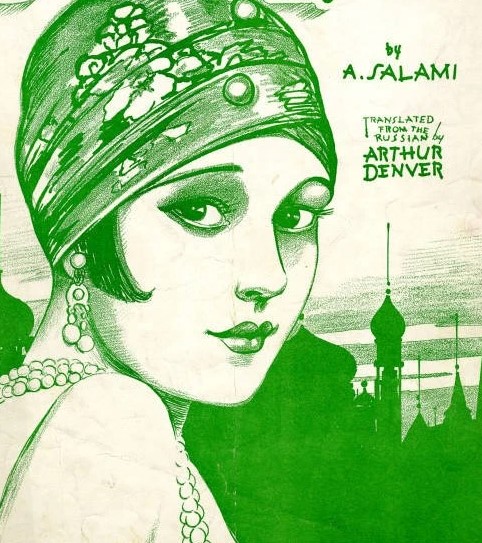
Growing up in an ethnic Italian Bronx, New York neighborhood in the 1950s, I spent many nights harmonizing doowop music with my buddies under corner streetlights. In the 1980s and 1990s, I was the guitar-strumming cantor at our parish Sunday “folk” mass. That experience inspired me to compose worship songs that were later recorded by vocalists and choirs on a CD entitled If I Ask. I was able to combine my love for music with my economics interests in a path-breaking journal article, “From Rhythm and Blues to Broadway: Using Music to Teach Economics” (The Journal of Economic Education, Vol. 31, June 2000), cited numerous times in subsequent literature. And during our continuing long marriage, my wife and I traveled extensively and always returned with artwork, sculpture, and hand-crafted items from Europe, China, Peru, Turkey, and Africa. For my 45rpm record collection, in addition to the music itself, I liked to collect the colorful picture sleeves that were issued. I always had an eye out for them as I perused estate and garage sales. My encounter with illustrated song sheets came about twenty years ago. I immediately stopped collecting records and began accumulating what I viewed as attractive artwork that happened to be on song sheets.
 Illustrated Song Sheets